
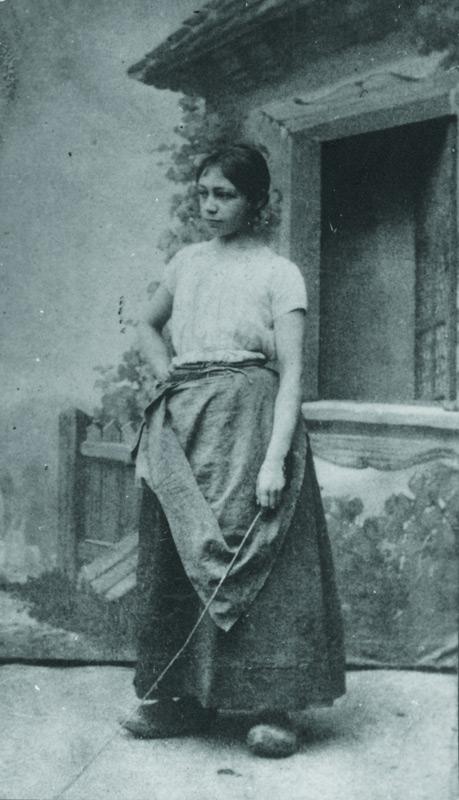
Käthe Schmidt as Gänseliesel at the costume festival organised by the School of Women Artists in Munich, 1889,
Kollwitz Estate, Käthe Kollwitz Museum, Cologne
Happy birthday, Käthe!
To mark Käthe Kollwitz’s birthday, we are commemorating one of the most significant female artists of the 20th century – and, at the same time, her roots in Königsberg.
As a small token to mark her birthday, the first 100 visitors tomorrow will receive, along with their admission ticket, a piece of original Königs Marzipan from the Charlottenburg-based manufacturer Wald Königsberger Marzipan – a sweet memento of the city where Käthe Kollwitz’s life began.
On 8 July 1867, Käthe Kollwitz was born as Käthe Schmidt in Königsberg. The East Prussian city was far more than just the place of her childhood: it was here that her personality, her sense of social responsibility and her artistic view of the world were shaped. She grew up in a liberal, cosmopolitan family home where education, art and social engagement were highly valued. Her talent for drawing was recognised and nurtured from an early age – at a time when access to academic art education was still largely denied to women. The intellectual atmosphere of Königsberg at that time and of her family home laid the foundations for a body of work that continues to move people around the world to this day.
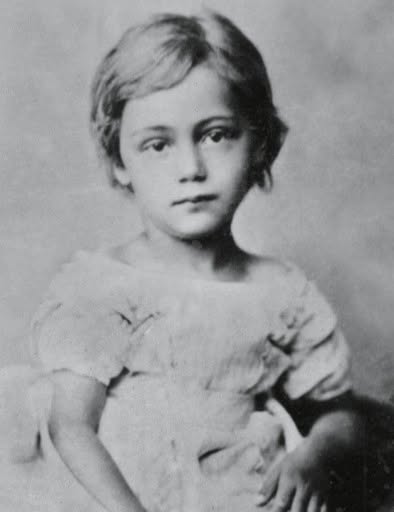
Käthe Schmidt aged 5, 1872, photographer unknown, Kollwitz estate, Käthe Kollwitz Museum, Cologne
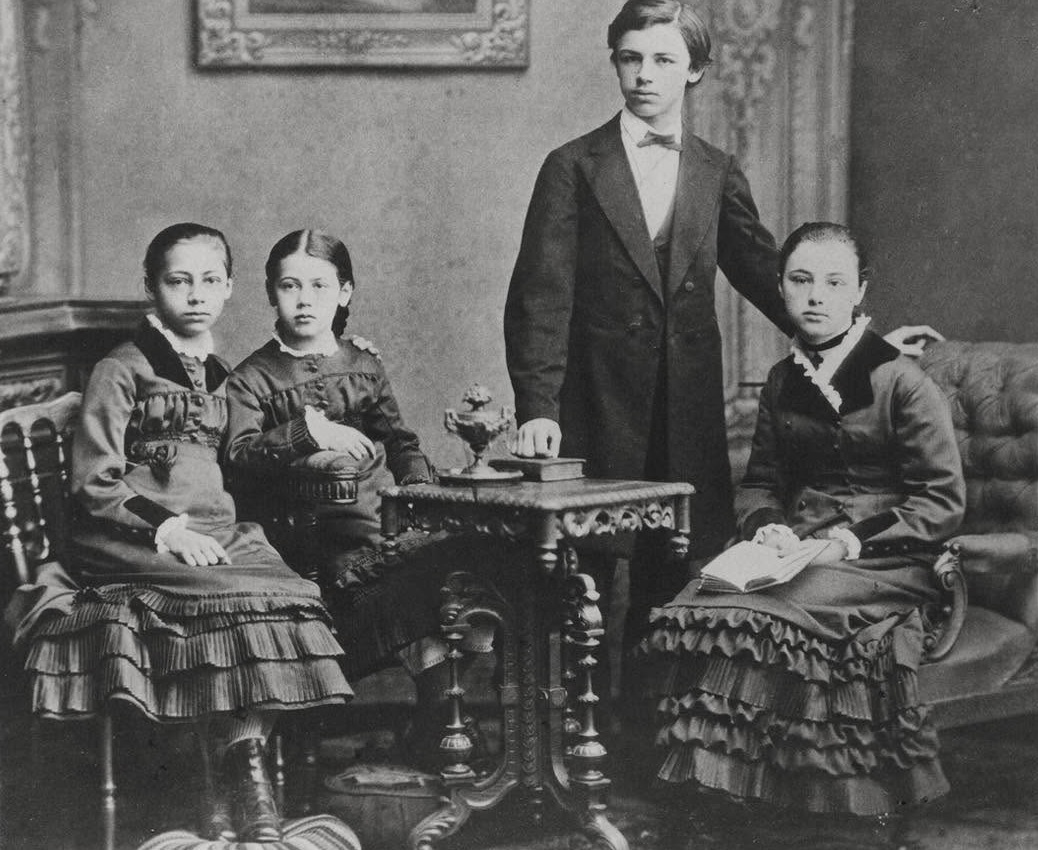
The Schmidt siblings, from left to right: Käthe, Lisbeth, Konrad and Julie, c. 1880, photographer unknown, Kollwitz estate, Käthe Kollwitz Museum, Cologne
In her memoirs, her childhood friend Helene Bloch described just how full of life, spirited and curious the young Käthe was:
“I have a very lovely and vivid memory from her teenage years at her parents’ house, where I was often invited to so-called ‘balls’. We would dance the whole evening through. She danced with passion and was constantly falling in love all over again. Once we spent an entire evening looking at illustrations in the ‘Kladderadsch’, and it was wonderful for me to see her laughing so heartily at Oberländer’s humorous drawings. – The relationship between the children and their parents was wonderful. The children had complete freedom; they were allowed to spend their pocket money – which was also intended for their clothes – manage their money as they wished – and yet respect and obedience towards their parents were the highest law. I was always impressed by how, in the family, everything intellectual took precedence and how money was always made available for theatre and literature, whatever the circumstances.”
And Helene Bloch goes on to report:
“At a later ball, to the amazement and delight of everyone present, she appeared as a ‘Bacchante’, singing and dancing with incredible passion, a wreath in her hair.”
These recollections give a profound insight into the Schmidt household. It was an environment that had a lasting influence on Käthe Kollwitz and laid the foundations for her later work.
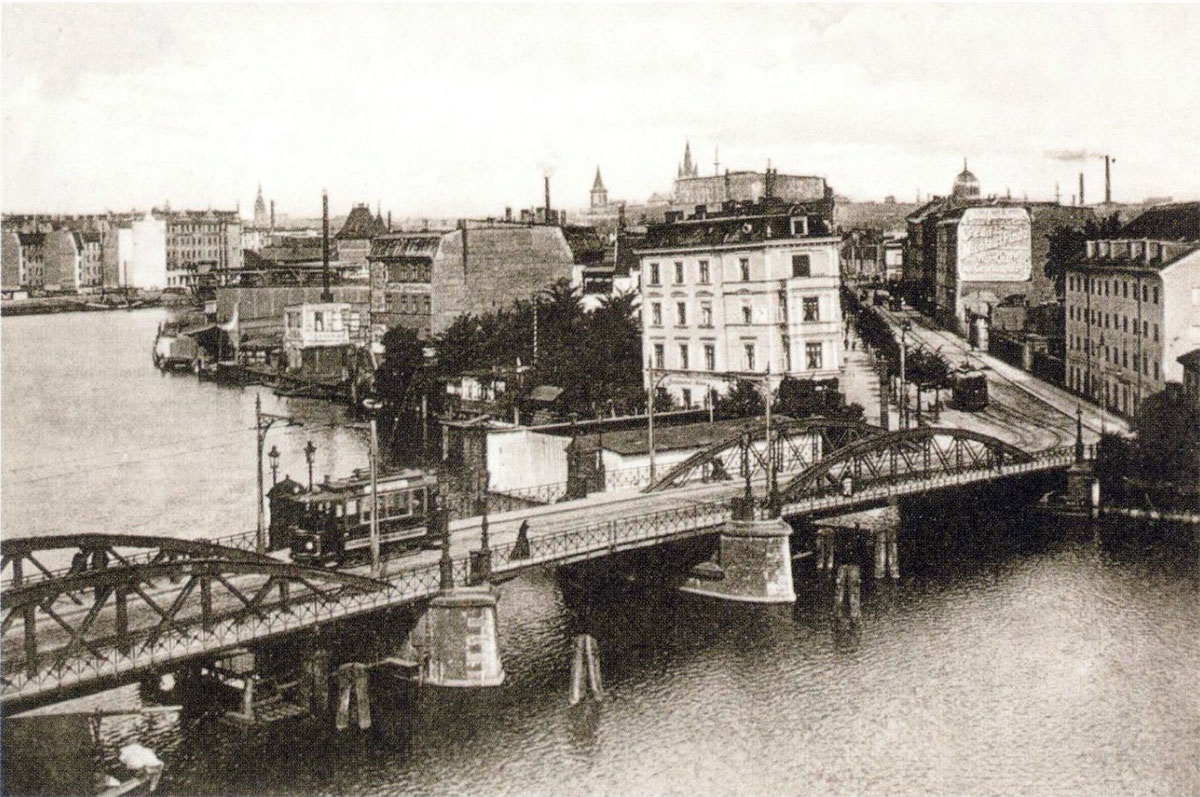
View of the Hohe Brücke and the southern part of the Weidendamm in Königsberg, c. 1900, East Prussia Picture Archive, Hamburg
The writer and art historian Paul Fechter, who met Käthe Kollwitz in person, later described her in vivid recollections. In them, he not only paid tribute to her extraordinary charisma, but also recalled her Königsberg origins.
‘(…) It was here that Käthe Kollwitz came towards me. I can still picture her before me, the slender, delicate figure of the woman with a face that remained unforgettable in the memory of anyone who ever saw it. Formally speaking, it was perhaps not beautiful; even back then I felt it was one of the most beautiful women’s faces I had ever encountered. Everything about it was striking: the brown eyes, which at times seemed to gaze as if from the beyond; the upper lip, which was strikingly long; the voice. The strange thing was that, when you saw her, you really only noticed her eyes – and afterwards, only her voice. It was one of the most beautiful voices, without the slightest hint of artifice in its tone, a soft, at times almost deeply moving, subdued voice, in which there was scarcely a trace of Eastern tones, even though Käthe Kollwitz came from Königsberg. At times there was a very slight lisp in her speech, which very soon became so much a part of her that one could no longer imagine her without it …”
Although Käthe Kollwitz created her most significant works in Berlin, her years in Königsberg always left a lasting mark. Her home town gave her not only her roots, but also the intellectual and human values that permeated her entire life and work. Humanity, empathy and the conviction that art bears responsibility became the guiding themes of her work.
On her birthday, it is therefore worth not only admiring her famous works, but also reflecting on the place where it all began. The young woman who danced with such passion in Königsberg, laughed heartily and grew up in an extraordinary family home, became an artist whose work continues to move people worldwide to this day and whose message has lost none of its relevance.
Our heartfelt thanks go to the Wald Königsberger Marzipan Manufactory on Pestalozzi-Straße in Charlottenburg for their kind support of this special birthday campaign.