Stage 1: The beginnings
Käthe Kollwitz and the theaters of Berlin around 1900
Max Halbe “Jugend” (Youth)
Gerhart Hauptmann “Die Weber” (The Weavers)
Johann Wolfgang von Goethe “Faust. Part I of the Tragedy” and “Part II of the Tragedy”

The Käthe Kollwitz Museum Berlin is opening a new perspective on the life and work of one of Germany’s most important artists in the former theater building of Charlottenburg Palace. The special exhibition “Käthe Kollwitz and the Theater” focuses on a topic that has received little attention to date: Käthe Kollwitz and her family’s affinity for the theater.
On this page, you will find an overview of the five exhibition rooms “stages” and can delve deeper into further information about people and plays of the time.
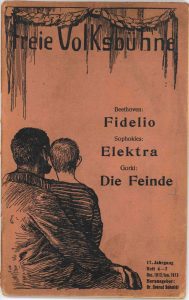
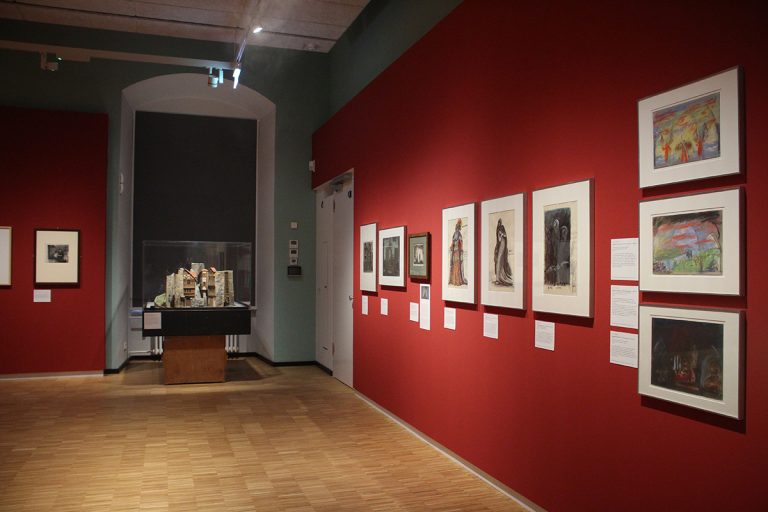
Käthe Kollwitz and the theaters of Berlin around 1900
Max Halbe “Jugend” (Youth)
Gerhart Hauptmann “Die Weber” (The Weavers)
Johann Wolfgang von Goethe “Faust. Part I of the Tragedy” and “Part II of the Tragedy”
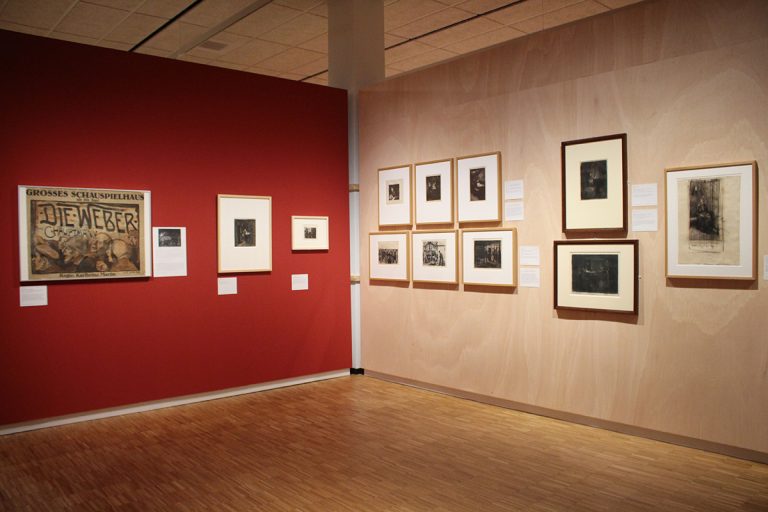
“Gretchen”, “Germinal”, and “A Weaver’s Revolt”
Emile Zola “Germinal”
Gerhart Hauptmann “Die Weber” (The Weavers)
Johann Wolfgang von Goethe “Faust. Part I of the Tragedy”
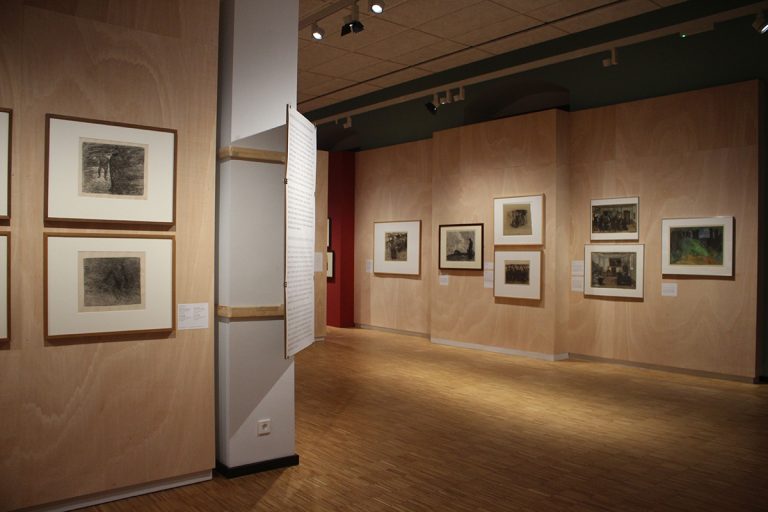
What Käthe Kollwitz watched and listened to on stage
William Shakespeare “Hamlet”
Friedrich Schiller “Die Räuber” (The Robber)
Georg Büchner “Dantons Tod” (Danton’s Death)
Ernst Toller und Ernst Barlach
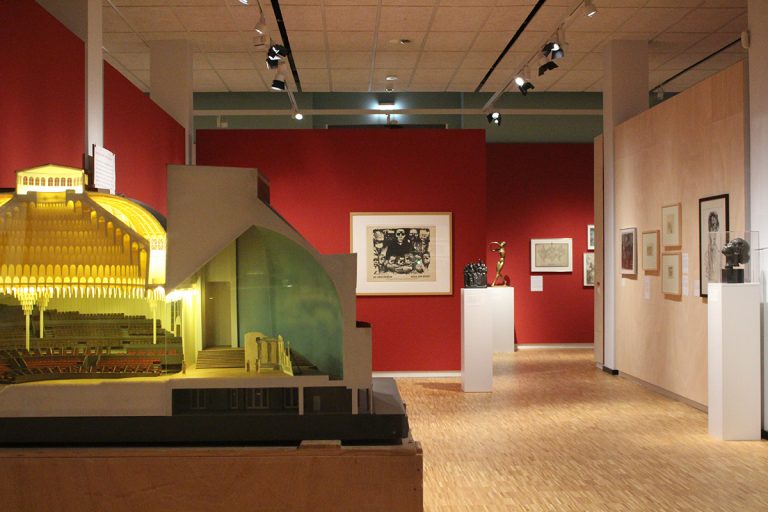
Theater in the Arena
Productions by Max Reinhardt at the Schumann Circus and, after its renovation, at the Großes Schauspielhaus: “Oedipus Rex” and “The Oresteia”
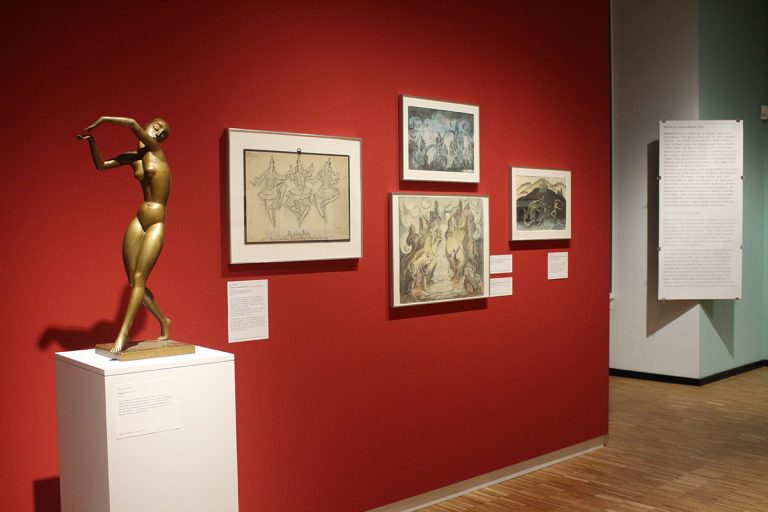
Grete Wiesenthal modernizes dance, the Ballets Russes perform in Berlin, and Käthe Kollwitz’s nieces dance on European stages.